

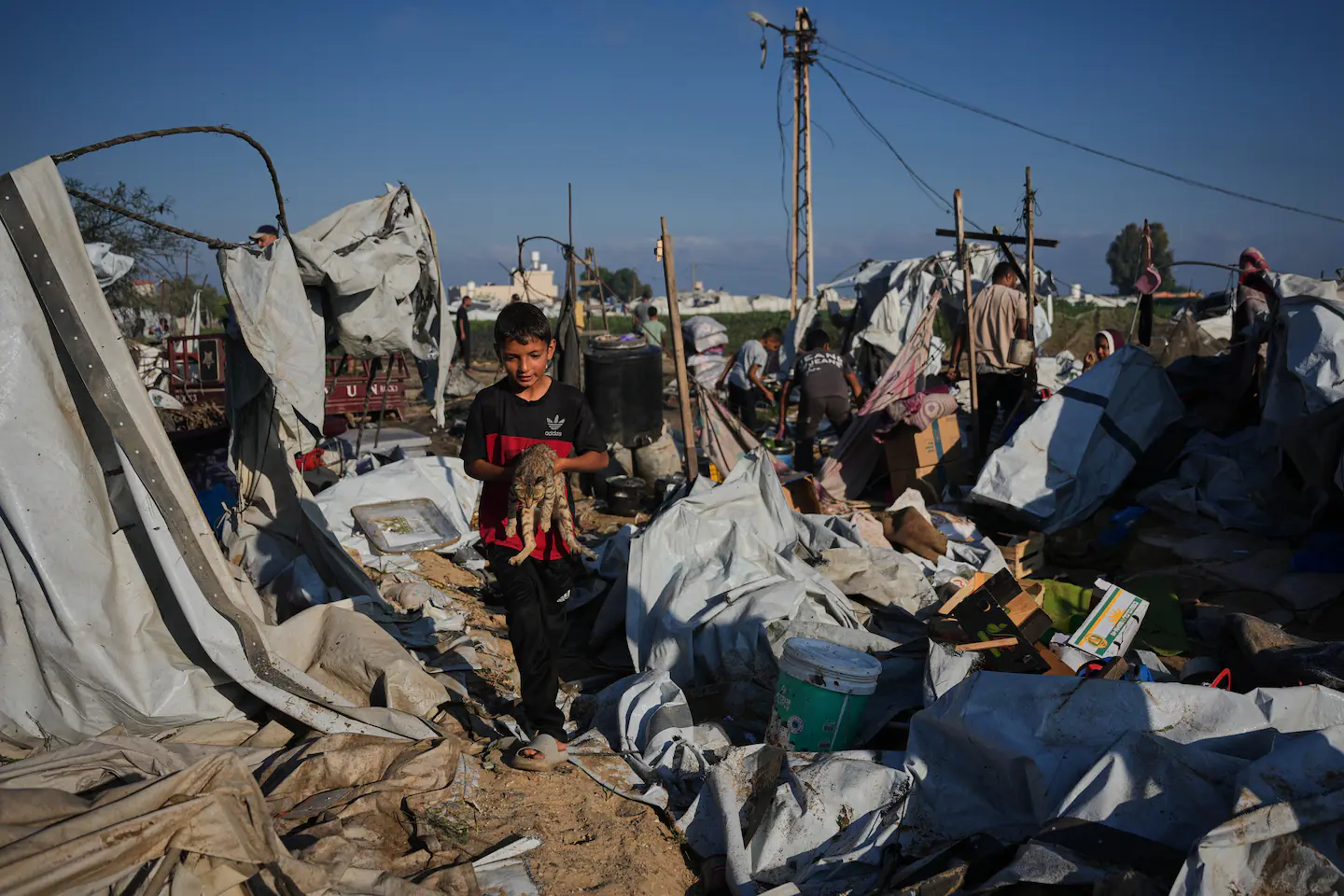
Are Gazans really superhuman?
It is a question I find myself asking more and more. Not because I believe the answer is yes, but because this is the image that has been created around us. An image of people who can survive anything, endure everything, absorb endless loss, and continue walking as if nothing happened. An image of people who bury their loved ones, lose their homes, experience hunger, displacement, fear, and grief, yet somehow wake up the next morning ready to work, help others, and carry on.
The world seems to admire this image. It celebrates the resilience of Gazans, their patience, and their ability to survive catastrophe after catastrophe. But sometimes I wonder whether this admiration comes with an invisible cost. Somewhere along the way, being resilient became an expectation. Being strong became an obligation. Showing pain became uncomfortable for others. The moment a Gazan expresses exhaustion, despair, fear, or weakness, it is often met with surprise, as though suffering is incompatible with the role we have been assigned.
Over the last two and half years, we have lived through every form of hardship imaginable. We have experienced bombardment, displacement, starvation, loss, and the constant fear of death. We watched neighborhoods disappear, hospitals collapse, loved ones vanish beneath rubble, and families scattered across the Gaza Strip and beyond. We said goodbye to friends without knowing whether we would ever see them again. We spent nights awake listening to explosions, wondering who among our loved ones would still be alive in the morning. Yet throughout all of this, we were expected to continue functioning. We were expected to work, produce, care for others, offer support, and somehow remain emotionally intact.
Resilience and suffering
Even now, after what many describe as a ceasefire, life in Gaza is far from peaceful. Every day brings news of new casualties, new attacks, new losses. Many people remain without proper shelter. Families continue living in tents or damaged homes. Essential infrastructure remains destroyed. Medical services are overwhelmed. Humanitarian assistance remains insufficient, and reconstruction hasn’t begun. For many people, survival is still a daily struggle.
Perhaps one of the greatest misunderstandings about resilience is the belief that resilient people do not suffer. As a mental health professional, I know this is not true. Resilience does not mean the absence of pain. It means continuing despite pain. It means carrying wounds while still trying to move forward. Some of the most traumatized people I know are also among the strongest.
Those of us working in healthcare and mental health often carry an additional burden. Every day, we listen to stories of grief, loss, terror, and despair. We witness pain not once, but hundreds of times through the experiences of those who come to us for help. In psychology, we call this secondary trauma. We carry not only our own suffering, but fragments of everyone else’s suffering too. Over time, those fragments accumulate.
I am not immune to this. Recently, the garden of my home was struck in June. People close to me were killed. They were not strangers whose names appeared briefly in the news. They were people I loved. And although it was not the first traumatic event I have experienced, trauma does not become easier because it happens repeatedly. I still experience flashbacks. I still live with hypervigilance. Sudden sounds still make my heart race. There are moments when I feel overwhelmed, exhausted, and fragile.
Grieving
Yet despite all of this, life does not stop demanding things from us. I still need to wake up every morning. I still need to care for my children. I still need to support my family. I still need to go to work and sit with people whose pain often mirrors my own. Sometimes I wonder whether what people call strength is simply the lack of any alternative.
Over the last two days, teams have been searching through the ruins of our beloved colleague Dr. Maisara Al-Rayyes’ home. Dr. Maisara was killed along with his entire family during the first weeks of the war, and for more than two years their bodies have remained beneath the rubble. Yesterday, two of his sisters finally recovered. One was identified by a necklace she wore and by the personal belongings found beside her. Her bag and identification card were still there, silent witnesses to a life interrupted in an instant and left waiting beneath the debris all this time.
The search continues. loved ones gather every day around the ruins, holding onto the hope of finding Dr. Maisara’s remains and the remains of his family, so they can finally give them the dignity of a proper burial. After all this time, they are still waiting for a farewell that never came, still waiting for the chance to pray over him, to lay him to rest, and to mourn him as he deserves. There is something profoundly heartbreaking about watching people wait two years for the simple human right of burying someone they love.
These painful details brought back memories that all of us who lived through displacement carry within us. I remembered the backpacks we carried from one place to another. I remembered how each of us tried to fit an entire life into a single bag. Important documents, a few clothes, family photographs, medicine, and small belongings too precious to leave behind.
Unspeakable reality
No matter how much we write, describe, or explain, words remain inadequate. There are realities that cannot fully be communicated. You can describe hunger, but not what it feels like to watch a child ask for food you cannot provide. You can describe fear, but not the feeling of saying goodbye to your children before leaving home each morning and wondering if you will return. You can describe grief, but not the moment someone recognizes a loved one through a personal belonging recovered from rubble years after their death.
And yet, for all the suffering we have experienced, there is something else many of us have learned: gratitude. A painful and complicated gratitude. Gratitude for things that once seemed insignificant. A roof above our heads. A meal that fills our stomachs. Clean water. Electricity for a few hours. A phone call from someone we love. The simple blessing of being alive. These small details have acquired immense value because so many people around us have lost them.
So, when people ask me whether Gazans are superhuman, my answer is simple.
No.
We are not superheroes.
We are human beings. We become afraid. We grow tired. We grieve. We cry. We broke. We struggle. We carry traumas that may stay with us for years. We have moments of courage and moments of collapse. We continue not because we possess extraordinary powers, but because we have people we love, responsibilities we cannot abandon, faith that sustains us, and a deep instinct to protect life even when life becomes unbearably difficult.
Nour-Gaza Palestine