
Daniel Calzada
Head of the international programmes in Haiti and Mexico (MdM Switzerland)
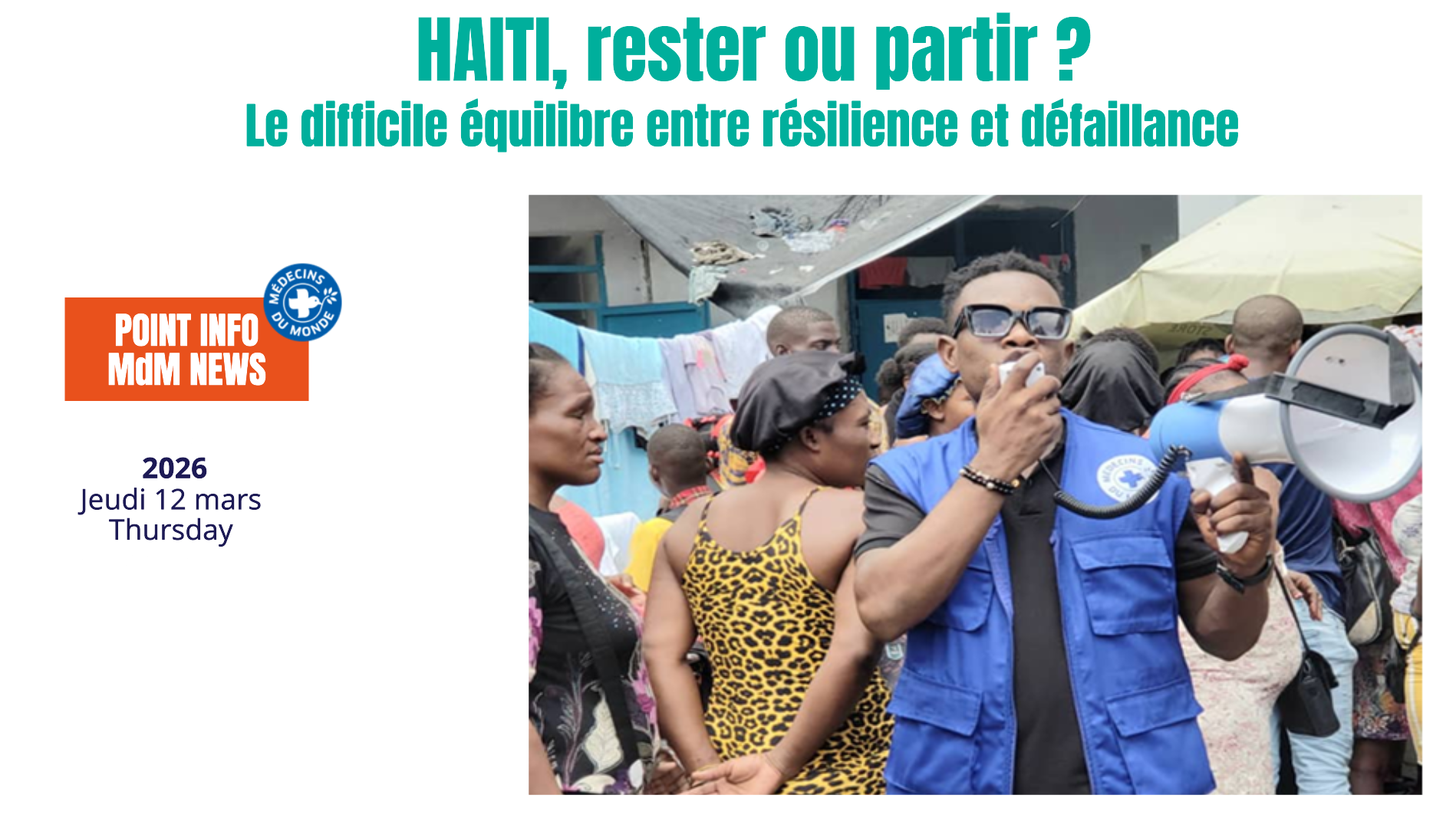
Below are the answers to two questions which couldn’t be discussed during the MdM News session of Thursday 12 March.
Antoine: Is the international community still considering getting involved in Haiti? MINUSTAH was deployed there in the past, with mixed results. What is the UN’s position today?
So far, the UN does not appear to be considering any direct involvement in Haiti. This raises questions, since funding was set aside to support the deployment of a Kenyan police contingent to the country in 2024, with the aim of assisting the Haitian police force. That support does not seem especially effective given the scale of the country’s needs, and has also sparked questions about the possible underlying interests behind this ‘cooperation’ agreement. With the ongoing situation in Haiti, it will prove difficult for the presidential election process to take place in a calm and peaceful manner.
Astrid : Have you noticed any consequences resulting from the tightening of the Dominican Republic’s migration policy, particularly concerning deportations? Is MdM Argentina carrying out advocacy actions?
The Dominican Republic has carried out forced returns. It is not only seeking to close its borders because of the geopolitical situation in the neighbouring country, but also because of long-standing tensions between the two republics, each accusing the other of attempts at destabilisation. The Colombian mercenaries who assassinated the president passed through the Dominican Republic, and many Haitians hold the Dominican authorities partly responsible for this. Irregular migration flows from Haiti into the Dominican Republic have also sustained tensions in recent years. The dispute over the Massacre River marked the high point of the Dominican Republic’s increasingly restrictive policy. A shift has clearly been observed, with the north-eastern regions being the most affected, as Haitians who are forcibly returned tend to remain near the border in the hope of crossing again. They don’t venture into the heart of the country, which is in a state of total chaos. ECHO, as a donor, has considered funding actions along the border.
MdM Argentina operates both in the Dominican Republic and in Haiti, and its advocacy stance is almost non-existent.