

For almost two years, I have been sharing my life, my fears, my losses, my fleeting moments of hope, and the relentless struggle to keep moving forward amid devastation. Many ask me, repeatedly: How do you continue? How do you find the strength to keep going when everything you once knew has been destroyed?
The answer has always been both simple and profound. What allowed us to wake up each morning and continue, despite exhaustion, hunger, and grief, was our humanitarian work. In a world where we were losing our homes, our loved ones, our safety, and sometimes even our sense of self, helping others became the one thing we still felt we could control. It gave meaning to our survival. It reminded us that we were not merely victims of war; we were caregivers, witnesses, and contributors to humanity. Serving others was not just our duty; it was the lifeline that kept us alive.
Throughout the most violent days of the war, we saw our neighborhoods reduced to rubble, entire families vanished, and streets once familiar turned into scenes of destruction, emptiness, and fear. Hunger gnawed at our bellies while despair weighed on our hearts. Yet, every day, we rose from the wreckage to carry medicine to children, to counsel a mother crying for her lost son, to comfort an elderly man trembling from fear and cold through our psychosocial support and mental health activities in our clinics. This work was the only thing that reminded us of our humanity in the face of relentless destruction. And yet, even this vital lifeline that gave meaning to our days, our ability to serve and care is now under threat.
Diminished hope
In March 2025, new registration requirements were introduced for international humanitarian organizations operating in Palestine, going beyond humanitarian principles and basic data protection standards. In an already fragile context, such measures risk undermining neutrality, compromising safety, and limiting the ability of organizations to work independently. Initially, many of us hoped these measures could be managed without undermining the essence of our mission or disrupting our daily work. Yet this hope gradually began to fade.
But in December 2025, the announcement came: dozens of organizations including the humanitarian organization (MdM-F) where I work were informed that their registration would not be renewed and that they were required to cease all activities of any kind in West Bank, Gaza Strip, and Israel within 60 days. This decision meant that thousands of vulnerable people risked losing access to essential mental health, medical, and psychosocial support services at a time when they needed them most. Entire communities were left facing the prospect of being abandoned. This was not simply an administrative decision. For us, it was a shock, a threat, a warning that even the one thing that had given our lives structure and meaning, our ability to serve, was no longer secure.
We began asking ourselves impossible questions. Are we no longer allowed to serve the people in need? Are we being forced out of our work? Will we be on hold when the need for our services is greater than ever?
Behind every organization, there are people, local staff, psychologists, doctors, nurses, social workers, and managers. People who did not arrive after the war but lived it from the first day. People like me. We have lost homes, livelihoods, savings, and, for some, entire families. During the worst months, many of us spent our last remaining money just to secure a bag of flour, a few liters of water, or a piece of bread to survive. And still, every morning, we showed up to work. Tired, hungry, traumatized, but committed to providing humanitarian aid.
Hospitals in ruins
Now, this new uncertainty has added another weight to our shoulders. Fear of losing our jobs, fear of exposure, fear of becoming invisible. Humanitarian workers in Gaza are living in constant anxiety, unsure if tomorrow we will be allowed to serve, unsure if we will still be protected. We strive to protect and heal others, we continue our work with all necessary precautions, aware that these challenges complicate our ability to reach and support those in need.
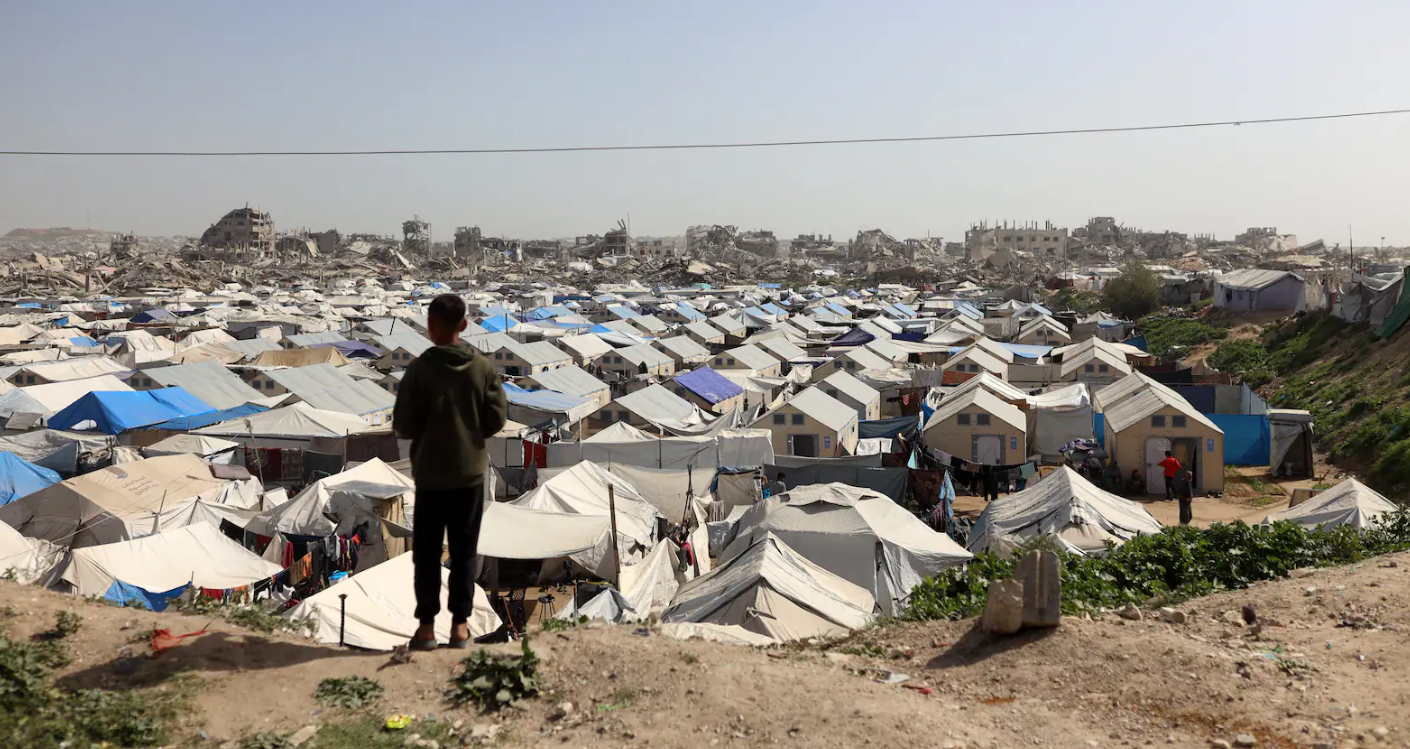
They say the war has ended. But its consequences are only becoming more complex. Most people still live in torn tents, soaked each night by winter rain. Children sleep on wet, cold ground, huddling together for warmth. Hospitals lie in ruins, clinics operate with minimal resources, and psychological wounds remain untreated. Communities that once relied on public services now rely entirely on humanitarian networks, the same networks now threatened by administrative restrictions.
These organizations are the backbone of survival. They fill the gaps left by collapsed systems, providing health care, psychological support, and basic needs like food and shelter to those who would otherwise have nothing. At Médecins du Monde France clinics alone, we serve approximately 2000-2200 beneficiaries every day; children, mothers, elderly people, trauma survivors, displaced families; all seeking some measure of relief, hope, or simply the means to survive another day.
Devastating consequences
What will we tell them if we are forced to stop? How do we explain to a mother that her child will no longer receive psychotherapy? How do we tell a traumatized survivor that counseling is no longer available? How do we abandon people in their time of greatest need? How do you silence hands that were created to help, or bind hearts that were trained to care?
Sometimes, I feel trapped, powerless, watching the doors slowly close while I remain inside. This is not just about registration. It is about control. It is about shrinking humanitarian space. It is about turning compassion into liability. It is about deciding who may help, and who may not.
For us, being humanitarian workers in Gaza is not merely a profession. It is a form of steadfastness. A commitment to life in a place surrounded by death. Despite everything, I am still here, still writing, still working and still believing that our voices matter.
Throughout this war, I have shared my story not to seek sympathy, but to let truth travel beyond borders. Today, I am writing again, not to complain, but to draw attention to the urgent reality and what is at stake. If humanitarian organizations are forced to leave Gaza, the consequences will be devastating; not only for institutions, but for millions of human beings who depend on them for survival, dignity, and hope.
We do not ask for privilege. We ask for space to serve. We ask for protection for those who dedicate their lives to helping others. We ask for the right to continue doing the only thing that kept us alive: caring.
Nour Z. Jarada, a Gazan Mental Health Manager at Médecins du Monde