

I write to you from “my bed from my home, in Gaza”. You may not know what that small detail means to me. It is one of those tiny, private facts of life that no one pays attention to, yet every minute I lie here I feel a vast and almost guilty gratitude for having reached this moment. I look around, still unable to believe it. After two years of a long, merciless war; two years in which we tasted every shape of suffering imaginable; I can finally say, quietly: I consider myself a survivor.
When the ceasefire was announced in early October, we all watched the images: handshakes, staged smiles, embraces staged as if in a film. The world celebrated. Calls arrived from everywhere, congratulating us on peace, on safety. And still, I felt nothing. We were all stunned, as if the news had arrived to a people who had already been hollowed out by fear and loss. Could a ceremony, a signature, a press conference erase what we lived through? Could it lift from our chests the weight of months but years of terror? No. The memory does not simply vanish because the shells stop falling. It is imprinted. It is indelible.
Torture or neglect
As a mental-health professional, I understand the emotional numbness that follows prolonged trauma. After enduring continuous threats, the mind protects itself by shutting down overwhelming feelings. This is not a weakness, it is a natural survival mechanism, a way for the psyche to cope when danger feels unrelenting. Emotional numbness is the mind’s way of creating a temporary shield that allows a person to continue functioning even when the world around them is collapsing.
The ceasefire brought some concrete measures: an initial exchange of captives and promises of humanitarian access. But the pause in large-scale hostilities did not stop the smaller violences that continue to wound us; intermittent attacks, civilians killed or injured, reminders that any truce here is paper-thin.
The human toll is still being counted. Tens of thousands have been killed; thousands more remain missing or buried under rubble. Families search for loved ones through lists of the disappeared. Most of Gaza’s population is displaced, many living without adequate shelter, food, or medical care. These numbers are not just statistics; they are a weight on our hearts, a burden on our ability to mourn and process the losses we have endured.
Since the ceasefire, we have also seen the return of living prisoners; emaciated, trembling, searching for family members who no longer exist. And we have seen the return of bodies, marked by torture or neglect, mothers identifying their children from a ring, a scar, or a burned shirt. These scenes have stripped away any remaining belief in the high language of international law and human-rights rhetoric.
A shock and a balm
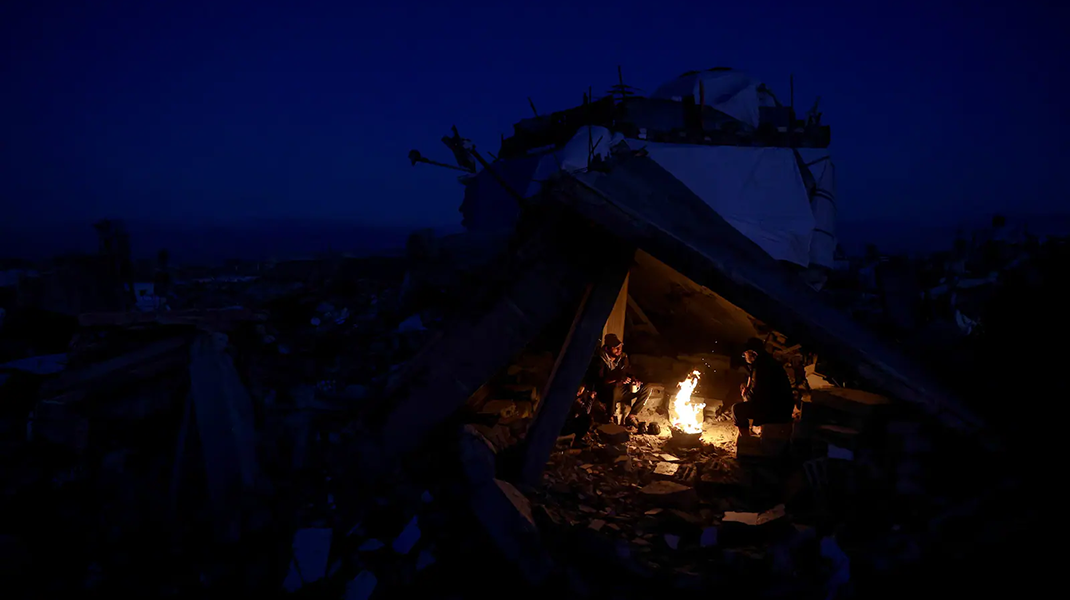
They say the war is over. But the aftermath is a cascade of smaller wars: battles for water, bread, medicine; battles with crossings; fights for survival in overcrowded shelters. War may have paused on paper, but destruction remains everywhere; homes flattened, schools turned into shelters, hospitals barely functioning. Who asked the people celebrating abroad how we will rebuild our lives? Where will we sleep? What will we eat? How do we live again when everything that made life possible has been erased?
Returning to Gaza in early November was both a shock and a balm. I had waited; unsure the war had truly ended. Displacement had drained our strength, our savings, and our hope. But when I finally returned, I walked the streets with different eyes. Gaza is still heartbreakingly beautiful. Beautiful in its stubbornness: people cleaning the rubble of their homes with raw hands; neighbors welcoming the displaced with open arms; children returning to partially reopened classrooms in tents, trying to learn again. Even the smell of a working restaurant felt like a small, defiant celebration of life.
At the same time, everywhere there are reminders of what we lost. Hundreds, thousands of our young left through evacuation routes or scholarships abroad during the war, clutching only their documents and their grief. They are brilliant, hardworking students who are left in search of education and safety; their hearts remain here, torn between hope for a better life and fear that these evacuations may be the beginning of permanent exile.
The beginning of recovery
At Médecins du Monde, we have returned to prepare the reopening of our clinics in northern Gaza, many of which were damaged or destroyed during the war. We continue to provide care for the wounded and the shattered, striving to meet urgent needs despite limited resources.
As Gazans, we keep careful records of the killed, the missing, and the orphaned. Every number represents a life, a story, a universe of loss. We do not forget; each name, each face, remains in our hearts, a reminder of the lives shattered and the weight of memory we carry.
Amid this pain, we also witness extraordinary resilience: endurance, generosity, solidarity, sacrifice, and an unbroken love for our land. People share whatever little they have, build makeshift schools, and preserve dignity even while mourning and rebuilding. These acts are not small; they form the foundation of recovery; and of our resistance to despair.
This war revealed strengths I didn’t know I possessed. I discovered that I could endure, that I can be patient, that I can keep helping others while grieving myself. I learned to comfort loved ones even as I said goodbye to friends. I have seen colleagues risk their lives daily, and children who, despite hunger and fear, still find ways to play. Strength is not only surviving danger; it is continuing to care, to offer hope, and to defend dignity when everything collapses.
People often ask me: “What has truly changed since October 9? “The answer is both small and profound. The fighting has quieted in some areas, and humanitarian aid has begun to slightly reach parts of Gaza. But the core reality remains: our communities are still in urgent need, entire neighborhoods lie in ruins, crossings remain unreliable, and thousands of families are still waiting to hear news of the missing. The ceasefire did not end our struggle; it is only the beginning of recovery, of rebuilding lives, of remembering those we lost, and of carrying on despite unimaginable loss. For the world, this may be called “post-war.” For us, it is simply the continuation of survival, the next stage of resilience in life that must go on.
Nour Z. Jarada, a Gazan Mental Health Manager at Médecins du Monde